
 فارسی
فارسی
Hair loss (alopecia) is among the most prevalent dermatological and cosmetic concerns worldwide, affecting both men and women of all ages. Beyond its physical manifestation, hair loss often carries deep psychological and social consequences, influencing self-esteem, interpersonal relationships, and overall quality of life.
Accurate diagnosis of the underlying cause of alopecia and selection of an appropriate treatment plan require expert evaluation by dermatologists and trichologists.
At Dr. Akbari Hair Transplant Clinic, patients receive professional diagnostic services and individualized treatment programs, ranging from medical therapy to advanced non-surgical and surgical solutions — including microsurgical hair transplantation. This article presents a comprehensive, evidence-based review of the causes, mechanisms, and most advanced treatments for hair loss available today.
What Is Hair Loss and How Does It Occur?
Human hair growth follows a continuous biological cycle consisting of three main phases:
- Anagen (Growth Phase): Active production of new hair from the follicle.
- Catagen (Transition Phase): Hair growth slows as follicles shrink.
- Telogen (Resting Phase): Old hair falls out and new hair begins to grow.
Any disruption in this cycle — caused by hormonal imbalance, genetic predisposition, nutritional deficiency, or autoimmune dysfunction — can result in temporary or permanent hair loss.
If the follicle structure is severely damaged or destroyed, regrowth becomes impossible, and only surgical hair restoration can correct the loss.
Major Types of Hair Loss
| Type | Primary Cause | Nature | Need for Hair Transplant |
|---|---|---|---|
| Androgenetic Alopecia (Genetic Hair Loss) | Genetic factors & DHT hormone | Permanent | ✅ Required in advanced stages |
| Alopecia Areata (Patchy Hair Loss) | Autoimmune disorder | Temporary or recurrent | ⚠️ Only in chronic scarring cases |
| Telogen Effluvium (Stress-Induced Shedding) | Stress, childbirth, fever, nutritional deficiency | Temporary | ❌ Not required |
| Traction Alopecia (Mechanical Hair Loss) | Tight hairstyles, extensions | Temporary at first | ⚠️ Required if scarring occurs |
| Drug- or Chemotherapy-Induced Hair Loss | Anti-cancer medications, radiation | Usually temporary | ❌ Not required |
| Thyroid-Related Hair Loss | Hypo- or hyperthyroidism | Temporary to semi-permanent | ⚠️ May need transplant if follicles are damaged |
1. Androgenetic Alopecia (Genetic Hair Loss)
This is the most common form of hair loss, affecting nearly 70% of men and up to 40% of women.
- In men: hairline recession and baldness in the crown area.
- In women: diffuse thinning in the mid-scalp region.
As this type of alopecia is permanent, hair transplantation remains the gold-standard treatment in advanced cases.
2. Alopecia Areata (Autoimmune Hair Loss)
Alopecia areata results from an autoimmune reaction where the immune system mistakenly attacks healthy hair follicles.
It often appears as round, coin-sized patches of sudden hair loss.
In most patients, medical therapy is effective; however, chronic or scarring forms may require surgical intervention.
3. Telogen Effluvium (Stress-Related Hair Loss)
Triggered by severe stress, fever, childbirth, surgery, restrictive dieting, or viral infections such as COVID-19, this condition leads to excessive shedding 2–3 months after the trigger event.
Fortunately, it is usually reversible, with hair regrowth occurring within several months.
4. Traction Alopecia
Resulting from prolonged mechanical tension — such as tight braids, ponytails, or extensions — this condition initially causes temporary shedding.
If continued, it leads to permanent follicular damage, requiring transplantation.
5. Drug- and Chemotherapy-Induced Hair Loss
Commonly seen during cancer therapy, this type of alopecia is mostly temporary. Once treatment ends and the body recovers, hair typically regrows spontaneously.
6. Thyroid-Related Hair Loss
Both hypothyroidism and hyperthyroidism can disrupt the hair cycle, leading to thinning and brittleness.
When thyroid function is stabilized through medical management, hair loss often improves naturally.
Primary Causes of Hair Loss
- Genetic predisposition
- Hormonal imbalance (androgen excess)
- Nutritional deficiencies (iron, zinc, vitamin D, biotin)
- Chronic psychological stress
- Autoimmune disorders
- Poor scalp circulation
- Certain medications or systemic illnesses
⚠️ Warning: Hair loss can sometimes indicate an underlying medical condition. Self-medication without professional diagnosis may worsen the problem.
Warning Signs That Require Medical Consultation
- Progressive hair thinning
- Visible scalp through hair
- Patchy or circular bald spots
- Receding hairline
- Temple or crown baldness
- Shedding over 100 hairs per day
If you notice any of these symptoms, early evaluation at Dr. Akbari Clinic is strongly recommended.
Evidence-Based Hair Loss Treatments
Modern trichology relies on clinically proven therapies that target the biological causes of alopecia rather than its symptoms. At Dr. Akbari Hair Transplant Clinic, each treatment plan is guided by evidence-based protocols to ensure measurable, long-term hair restoration results.
1. Medical Therapy
| Medication | Mechanism | Indication |
|---|---|---|
| Minoxidil | Stimulates follicular growth | Men and women (topical) |
| Finasteride / Dutasteride | Reduces DHT levels | Men with androgenetic alopecia |
| Spironolactone | Anti-androgenic effect | Women with hormonal imbalance |
| Corticosteroids | Immune suppression | Alopecia areata |
⚠️ Caution: Hormonal or prostate-related medications must never be used without medical supervision due to potential side effects.
2. Nutritional and Supplement-Based Therapy
Correction of deficiencies through guided supplementation under medical supervision:
- Iron
- Zinc
- Vitamin B complex
- Vitamin D and E
- Biotin and amino acids
3. Non-Surgical Hair Restoration at Dr. Akbari Clinic
| Method | Purpose |
|---|---|
| PRP (Platelet-Rich Plasma) | Stimulates dormant follicles |
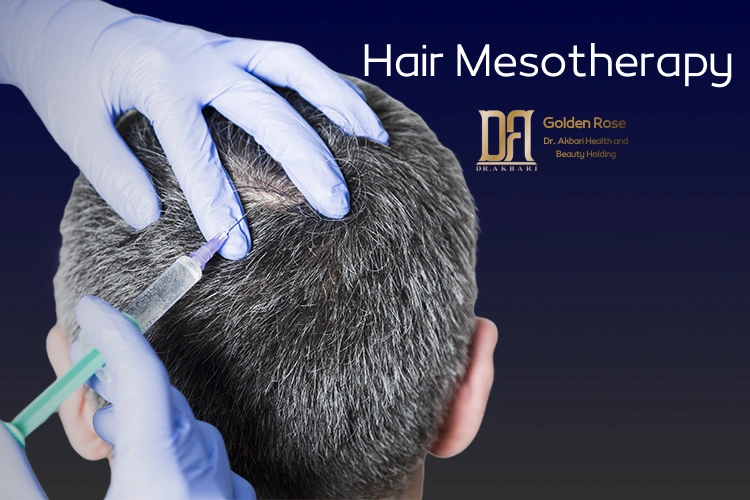
| Mesotherapy | Nourishes weak follicles with microinjections |
| Low-Level Laser Therapy (LLLT) | Enhances blood flow and oxygenation |
| Carboxytherapy | Improves local scalp circulation |
These methods are ideal for temporary or early-stage hair loss and can effectively delay or prevent the need for surgery.
Surgical Hair Restoration: Advanced Hair Transplant Techniques
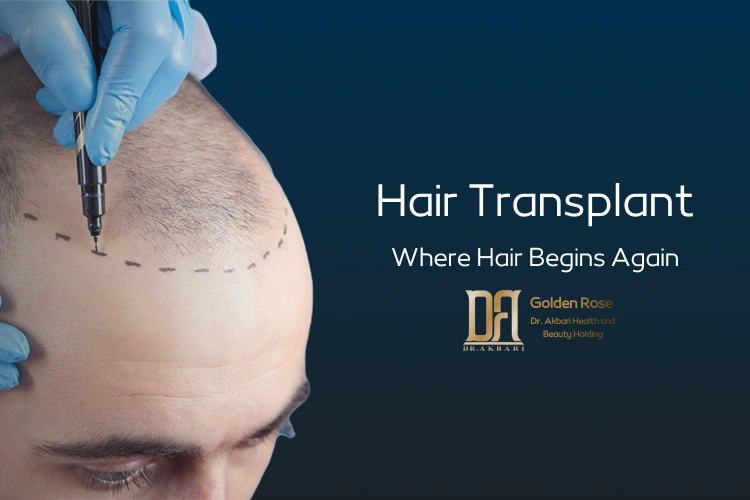
Hair transplantation is a minimally invasive surgical procedure in which healthy, DHT-resistant follicles are extracted from the donor area (usually the back of the head) and implanted into balding zones.
Key Benefits
- Permanent and natural results
- Restored confidence and appearance
- Minimal maintenance required
When Is Hair Transplant Recommended?
- Advanced genetic baldness
- Permanent post-burn or post-surgical hair loss
- No response to medical therapy
Hair Transplant Techniques at Dr. Akbari Clinic
| Method | Extraction Technique | Density | Best for |
|---|---|---|---|
| FUT (Strip Method) | Removal of a narrow strip of scalp | High | Patients with strong donor area and large bald zones |
| FUE (Follicular Unit Extraction) | Individual follicle extraction | Very High | Men and women with small to medium bald areas |
| Hybrid (FUT + FUE) | Combined extraction | Extremely High | Extensive baldness requiring maximum grafts |
| DHI (Direct Hair Implantation) | Direct placement using implanter pen | Ultra-High | Natural density and faster recovery |
| Tissue Expansion | Balloon expander under hairy scalp | Moderate | Burn scars or frontal baldness |
| Scalp Reduction | Surgical removal of bald scalp | Moderate | Limited bald spots or post-surgical scars |
FUT (Follicular Unit Transplantation)
A narrow strip of hair-bearing scalp is excised, dissected under a microscope, and implanted into bald areas.
Advantages: High graft yield per session, strong graft survival, cost-effective.
Limitations: Linear scar, longer recovery.
FUE (Follicular Unit Extraction)
Follicles are harvested individually using micro-punch tools.
Advantages: No linear scar, minimal downtime, natural results.
Limitations: Time-consuming, requires high precision.
Hybrid (FUT + FUE)
Combines both methods to maximize graft number and achieve superior density.
Ideal for extensive baldness cases.
DHI (Direct Hair Implantation)
Using a specialized Choi Implanter Pen, follicles are inserted directly into the scalp without pre-cut incisions.
Advantages: Higher precision, minimal bleeding, natural direction of growth, and rapid healing.
Limitations: Higher cost, requires expert team and technology.
Tissue Expansion and Scalp Reduction
Used for reconstructive cases such as burn scars or traumatic alopecia, these methods involve either stretching existing hairy skin or surgically removing bald tissue.
Post-Transplant Care Guidelines
- Avoid washing for 48 hours
- No strenuous activity for 3 weeks
- Refrain from smoking or alcohol for 10 days
- Do not touch or scratch grafts
- Follow all prescribed care protocols
Neglecting post-op instructions may compromise graft survival.
Possible Side Effects
Most are mild and temporary, including:
- Swelling
- Mild pain or redness
- Scalp itching or flaking
At Dr. Akbari Clinic, all procedures are performed under strict medical supervision to minimize complications.
Hair Transplant Cost at Dr. Akbari Clinic
Pricing depends on several factors:
- Baldness severity and graft count
- Chosen technique (FUE, DHI, etc.)
- Donor hair quality
- Equipment and medical expertise involved
Note: The cost of hair transplantation in Iran — especially at Dr. Akbari Clinic — is significantly lower than in the U.S., U.K., or Turkey, while maintaining world-class medical standards.
Why Choose Dr. Akbari Hair Transplant Clinic?
- Accurate diagnosis using advanced trichoscopy
- Latest hair restoration technologies (DHI, PRP, hybrid transplants)
- Highly skilled and experienced surgical team
- Full pre- and post-operative support
- Customized treatment plans
- Affordable pricing for international patients
- Proven track record of natural, lasting results